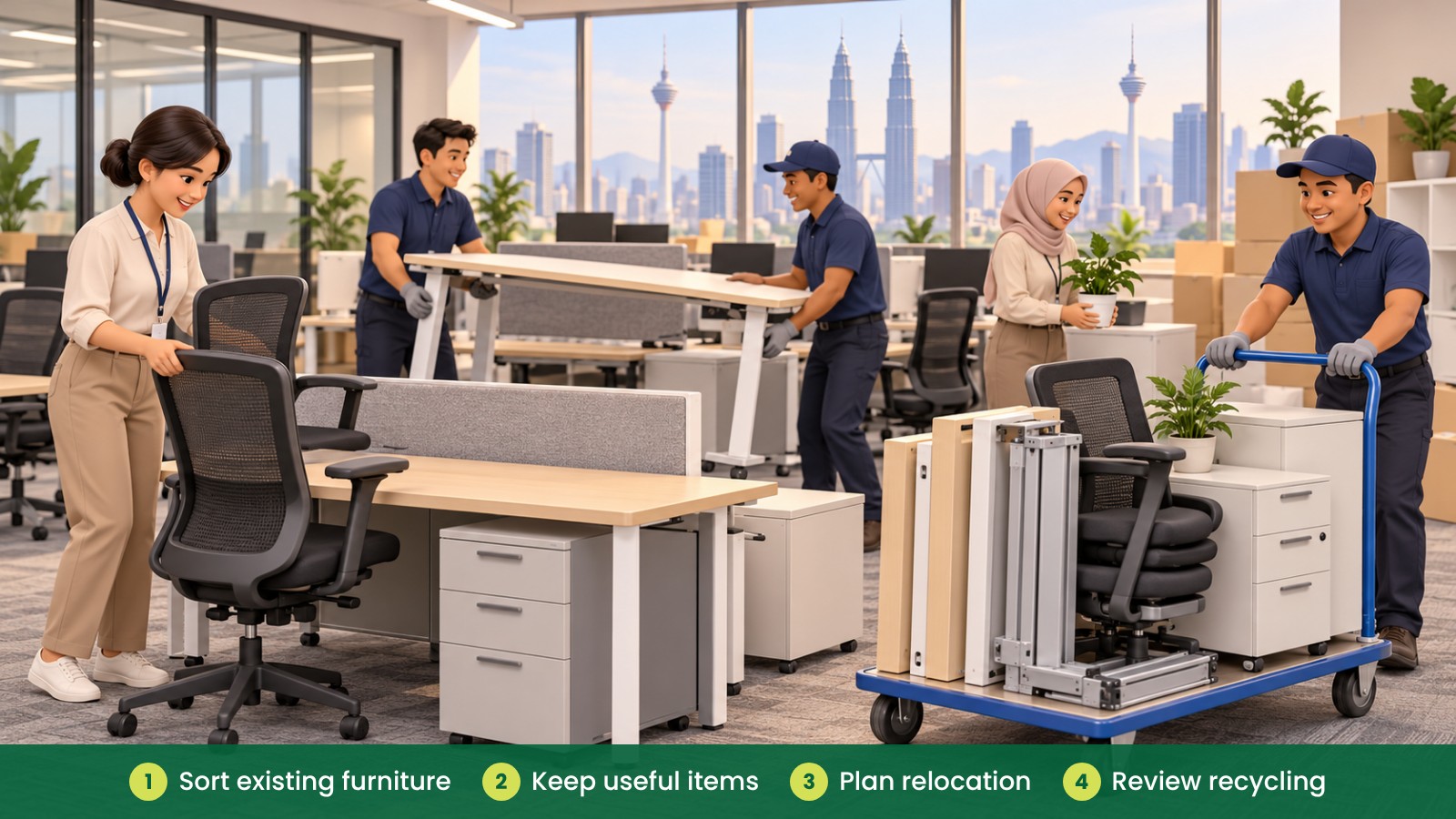
A year-end office clear-out is a chance to decide which furniture should stay, move elsewhere or leave the organisation. In KL and Selangor, start by checking condition and future use before arranging transport, donation or recycling for suitable items.
Key Takeaways
- Sort furniture by condition, usefulness and likely next destination.
- Reuse or relocate suitable items before considering disposal.
- Check access, dismantling and transport needs before moving furniture.
- Ask local service providers what items they can accept for recycling.
- Plan the clear-out early so decisions are not rushed at year-end.
The 2-minute version
- Make an inventory of desks, chairs, cabinets and shared furniture.
- Check each item’s condition, size and potential use elsewhere.
- Separate items to keep, relocate, donate or investigate for recycling.
- Confirm transport, dismantling and acceptance arrangements.
- Coordinate the removal plan with staff, facilities and the receiving location.
How should you sort old office furniture?
Start with a simple review of each item. Look at its condition, whether it still suits its purpose and whether another team or location could use it. Avoid deciding that furniture is waste just because it no longer fits the current office layout.
It can help to label the decision for each item in your internal list: keep, relocate, donate or check recycling options. For furniture that needs repair or dismantling, note that too. The aim is to decide where each piece should go before the office clear-out begins.
- Keep: still useful in the current office or planned layout.
- Relocate: suitable for another department, branch or new office.
- Donate: potentially useful to another organisation, subject to condition and acceptance.
- Recycle: check whether a local provider accepts the furniture or its materials.
What should you check before relocating furniture?
Confirm that the receiving location has space and that the furniture suits its layout. Measure large desks and cabinets, check the route through doors and lifts, and find out whether items need dismantling before they can be moved.
Agree who will receive the furniture and how it should be grouped or identified. This helps reduce confusion during a move between offices in Kuala Lumpur, Petaling Jaya, Shah Alam or elsewhere in Selangor.
How can you prepare furniture for reuse or donation?
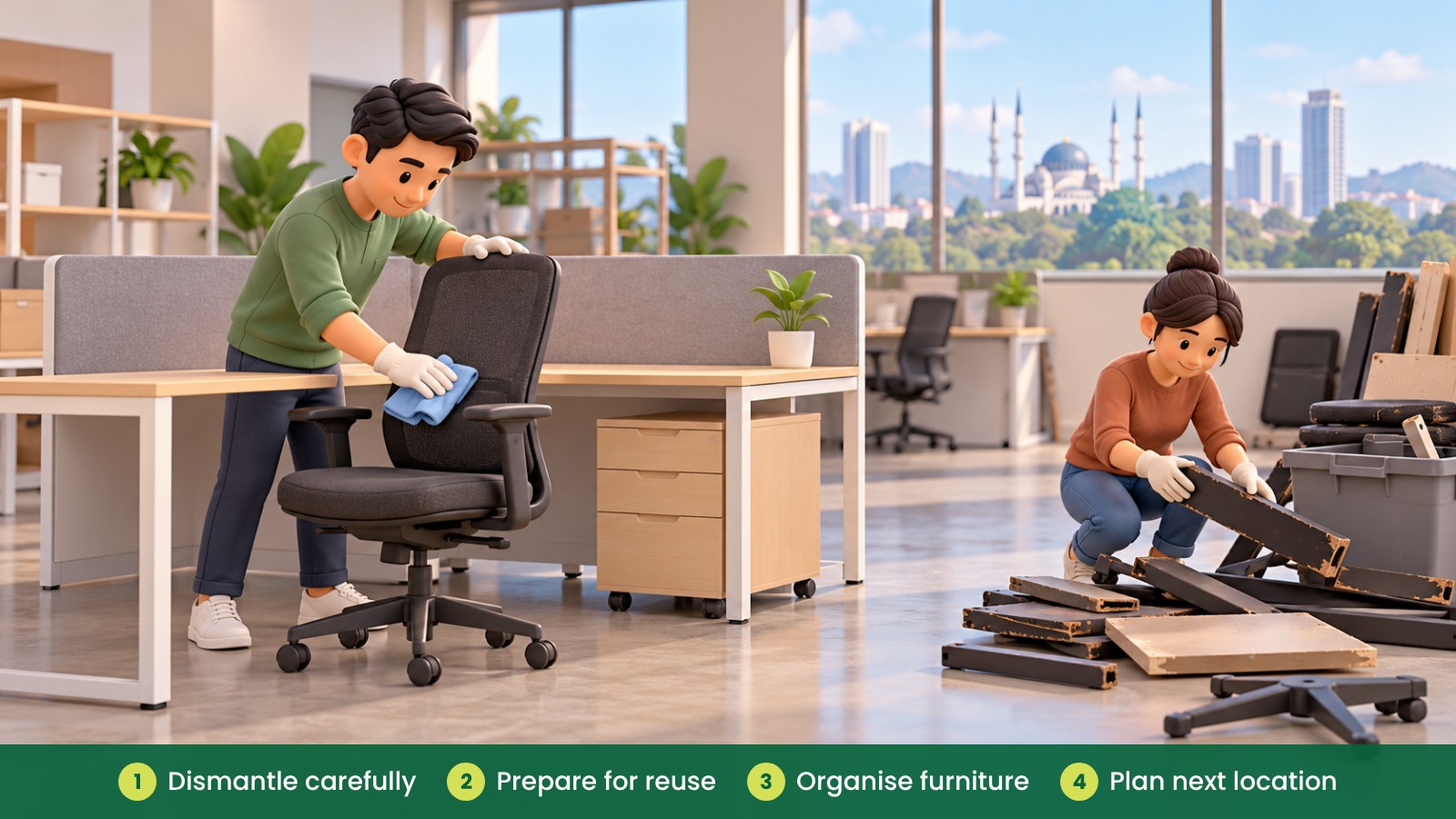
Check that the furniture is in a condition suitable for its next use. Clean it as appropriate, separate any loose parts and keep hardware with the item if it has to be dismantled. Before arranging a donation, confirm that the receiving organisation wants the item and can accept its condition and size.
If the furniture is being moved to another office, make a basic inventory and agree the new placement. Some items may be easier to reuse if they are dismantled and reassembled by people familiar with the furniture. Confirm that service and transport arrangements are understood before the move.
How do you decide what can be recycled?
Recycling options depend on the item, its materials and what local providers accept. Ask a recycling or waste service provider about the specific furniture you have, including any separate metal, board, plastic or upholstery components. Do not assume every provider accepts every furniture type.
Keep a record of the decisions made for the clear-out if your organisation needs it for internal tracking or ESG discussions. Ask providers what information they can supply about items they collect, reuse or recycle.
Lower-carbon choices under ESG pressure
Businesses may face ESG questions about how they manage resources, purchasing and disposal. A clear-out can support more deliberate choices when suitable furniture is reused or relocated before new items are ordered.
- Check whether another team or office can use furniture that remains serviceable.
- Repair or reconfigure items when that makes them practical to use again.
- Relocate suitable furniture before buying replacements for the new office.
- Ask local providers what furniture or materials they accept for recycling.
- Plan future purchases around confirmed needs to avoid unnecessary replacements.
Fictional example: an office clear-out in Petaling Jaya
Fictional example: an SME in Petaling Jaya is preparing to reorganise its office before the new year. The facilities team lists its desks, chairs and cabinets, checks which pieces can move to a nearby office in Shah Alam and asks a local provider which remaining items it can accept for recycling.
Common mistakes during an office clear-out
- Removing furniture before checking if another team can use it.
- Assuming a donation or recycling provider will accept every item.
- Forgetting to measure furniture and access routes before transport.
- Separating furniture from loose parts or hardware needed for reassembly.
- Leaving clear-out decisions until the office must be emptied immediately.
What can go wrong?
Without a plan, usable furniture may be discarded, items may arrive at a location that cannot use them, or removal arrangements may not match the office schedule. Confirming destinations and acceptance details before moving anything can help avoid unnecessary handling and last-minute decisions.
How can iGreen help?
iGreen can help review existing furniture, identify items that may be reused or relocated and plan furniture changes for your next office layout. We can also discuss dismantling and relocating existing furniture, subject to the items and project requirements, for KL and Selangor offices.
Discuss your office clear-out with iGreen through /contact-us.
Frequently asked questions
What should I do with old office furniture?
Review each item for condition and future use. Keep or relocate suitable furniture, explore donation where accepted and check with local providers about recycling options for the rest.
Can office furniture be reused in another branch?
It may be, if it fits the new space and remains suitable for its intended use. Measure the furniture and receiving area before arranging transport.
Will a recycling provider accept all office furniture?
Acceptance can vary by provider and item. Ask about the specific furniture and materials before arranging collection.
When should a company plan a year-end office clear-out?
Start once the move, layout change or disposal need is known. Early sorting gives more time to confirm destinations, transport and recycling options.
Prepared by iGreen Office Furniture