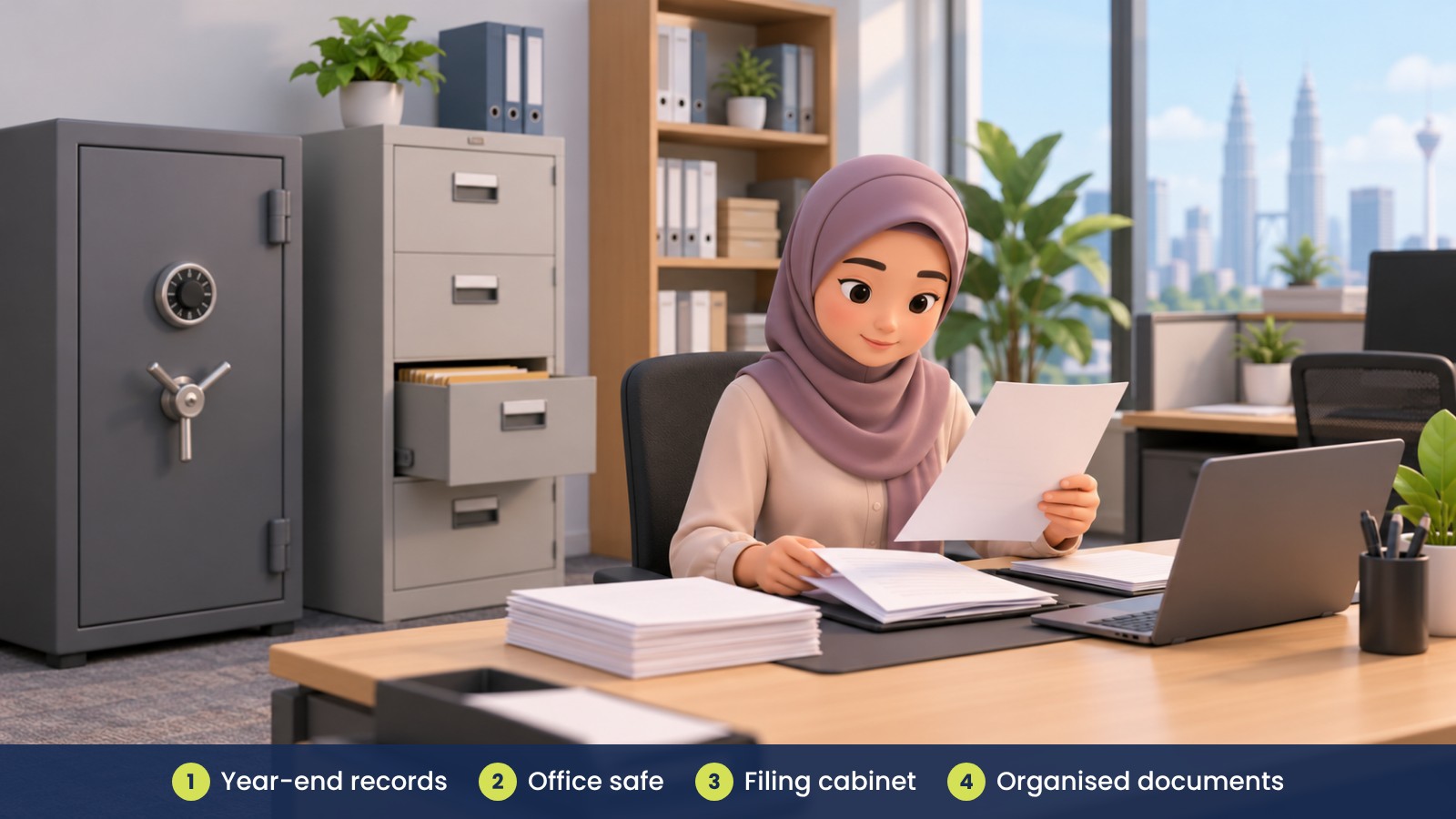
A filing cabinet helps organise and access everyday documents, while a safe may be worth considering when the storage requirement calls for a lockable, enclosed unit. Before choosing a fire-resistant safe for year-end records, check the documentation and stated rating for the exact model you are considering.
Key Takeaways
- Start by deciding which records need storage and how often staff need them.
- A filing cabinet and a safe serve different storage purposes.
- Do not assume a product’s protection from its appearance or description alone.
- Check the rating and supporting documentation for the specific model.
- Consider access, capacity, location and record-handling routines.
The 2-minute version
- List the records you plan to store and who needs access.
- Decide whether you need organised everyday filing, a lockable safe or both.
- Check the available space and the unit’s capacity and dimensions.
- Ask for documentation and the stated rating for the exact safe model.
- Confirm that the unit suits your internal records and access procedures.
Should you choose a fire-resistant safe or a filing cabinet?
A filing cabinet is typically used to arrange documents so staff can find and retrieve them. A safe is a more enclosed storage unit with a locking mechanism. These are different functions, so the choice depends on the records, access needs and protection requirements your organisation has identified.
Do not select a safe only because it is described as fire-resistant. Ask for the stated rating and documentation for the exact model, then review what the documents say about its intended use. Avoid assuming that one model’s documentation applies to another model in the same range.
- Filing cabinet: consider it for sorting and accessing working files.
- Safe: consider it when the records need a lockable enclosed unit.
- Both: separate day-to-day filing from records that need more restricted access, if that suits your process.
What should you consider before storing year-end records?
Make an inventory of the documents and materials you expect to keep. Consider whether staff need to retrieve them often or whether access should be limited. Follow your organisation’s own records-handling and retention procedures when deciding what to store.
Measure the proposed location before choosing a unit. Check the space available, the path to bring the furniture or safe into the room, and whether the door or drawers can open without blocking movement. Consider who will manage access and where keys or access details will be handled under your internal procedures.
What documentation should you request for a safe?
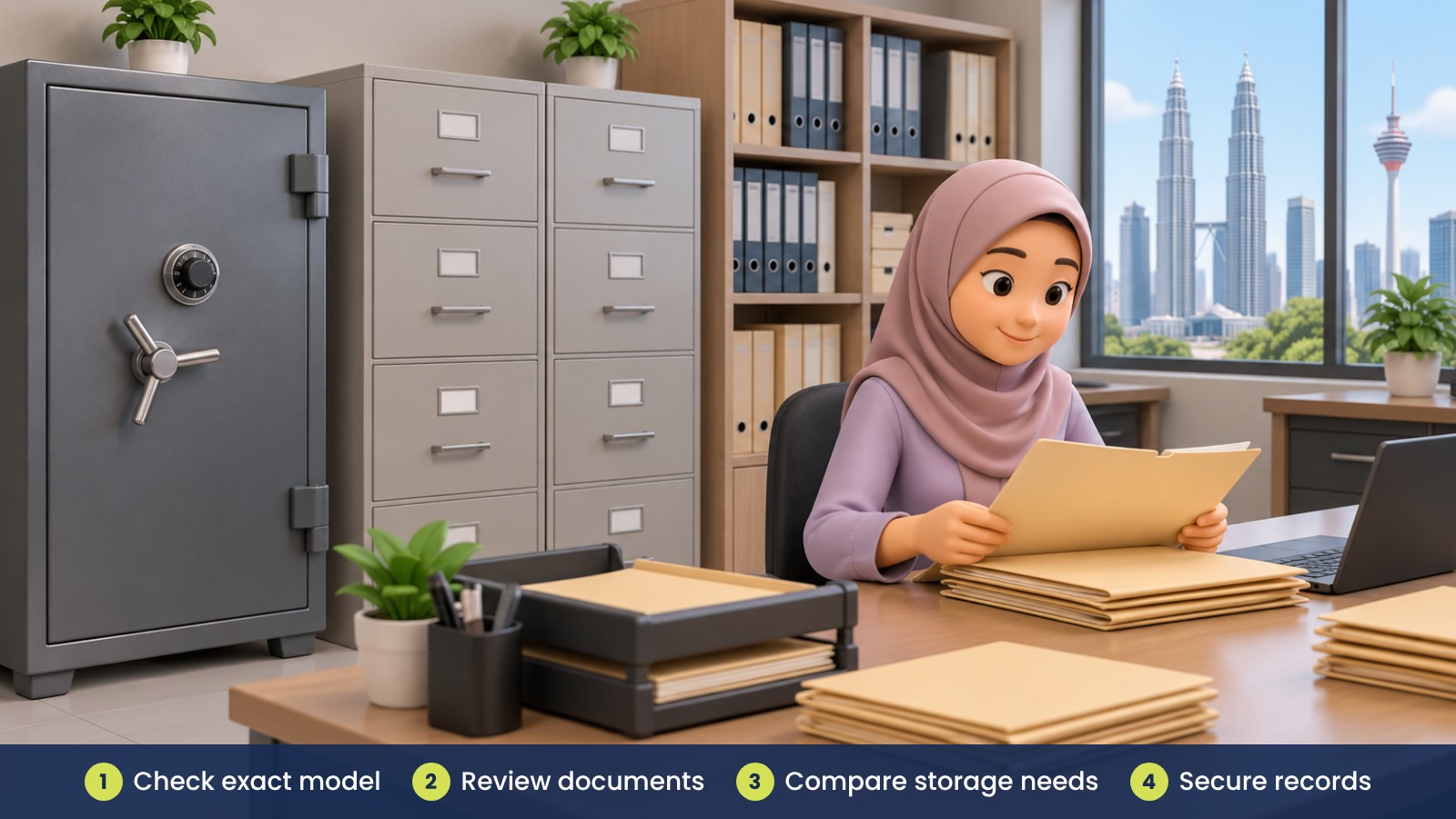
Ask the supplier for the documentation and stated rating that apply to the specific model, not just a general product family. Check that the model name or identifier in the documentation matches the unit being quoted. If anything is unclear, ask the supplier to explain what the document covers and which records or use cases it applies to.
If you are considering options in the Chubbsafes range, use the same model-by-model approach. Ask for the relevant documents for the specific unit under consideration and review them against your organisation’s requirements. Do not assume a particular protection level or performance from the brand name alone.
How can you compare a safe with a cabinet?
Compare the intended use, access routine, storage capacity, dimensions and documentation. A cabinet may be more convenient for frequently used files, while a safe may be considered for records that need a lockable enclosure. Your organisation may decide to use one or both, depending on its own document-handling needs.
- What records will be stored?
- How often will staff need access?
- Who will manage keys or access permissions?
- What are the unit’s dimensions and usable capacity?
- What does the documentation for the exact safe model state?
Lower-carbon choices under ESG pressure
Businesses may be asked how they manage resources and make purchasing decisions as part of wider ESG discussions. Choosing storage that fits actual record needs can help avoid buying more units than necessary and keep suitable furniture in use.
- Review existing cabinets and storage before adding new units.
- Buy only the capacity needed for the records your process requires.
- Choose durable furniture that can remain useful over time.
- Keep suitable cabinets in service for everyday document organisation.
- Ask suppliers about material information and end-of-life options.
Fictional example: a finance office in Penang
Fictional example: a finance team in Penang is organising year-end records and finds that active files are mixed with documents that are rarely accessed. The team separates everyday filing from records that need restricted access, measures the storage area and requests model-specific documentation before deciding whether a safe is suitable.
Common mistakes when choosing a safe or cabinet
- Assuming a filing cabinet provides the same function as a safe.
- Relying on a product description without checking model-specific documents.
- Buying a unit before measuring the room and delivery route.
- Choosing storage capacity without reviewing the records to be kept.
- Overlooking who needs access and how the organisation manages it.
What can go wrong?
A unit may not suit the records, access routine or available space. If documentation is not checked for the exact model, the buyer may also misunderstand what the product is intended to provide. Define the storage need first, then review the specific unit and documents before deciding.
How can iGreen help?
iGreen can help you review storage needs, compare cabinet and safe options and check the available space for a proposed unit. We can discuss the relevant product documentation for the specific model you are considering, without assuming that one model’s details apply to another.
Discuss your records storage requirements with iGreen through /contact-us.
Frequently asked questions
Is a fire-resistant safe the same as a filing cabinet?
No. A filing cabinet is generally used to organise and access documents, while a safe is a lockable enclosed unit. Check the documentation for any specific protection claim made about a safe model.
What should I check before buying a fire-resistant safe?
Ask for the stated rating and supporting documentation for the exact model. Confirm the model identifier matches the unit you are considering and review the documentation against your organisation’s needs.
Can a filing cabinet be used for year-end records?
It may suit records that need organised, regular access. Consider the documents, access routine and internal procedures when selecting storage.
Does a product range’s documentation cover every model?
Do not assume it does. Request and check the documentation for the specific model being considered.
Prepared by iGreen Office Furniture