This article is general guidance, not legal advice.
Open-office noise can make it harder for people to focus, especially when calls, conversations and shared equipment overlap. A few practical changes to layout, quiet spaces and team habits can help reduce avoidable distractions without making the office feel closed off.
Key Takeaways
- Identify the main sources of noise before changing the layout.
- Place focused work, calls and group discussions in areas that suit each activity.
- Use furniture, screens and storage to shape zones while keeping routes clear.
- Agree simple team habits for calls, conversations and shared equipment.
- Review the changes with staff and adjust what is not working.
The 2-minute version
- Listen and map: note where noise comes from and when it disrupts work.
- Group activities: place calls, collaboration and focused tasks in suitable areas.
- Plan quiet options: consider a quieter room, pod or booth for selected work.
- Set simple habits: agree where longer calls and discussions should happen.
- Review with staff: check whether the changes help and refine the layout.
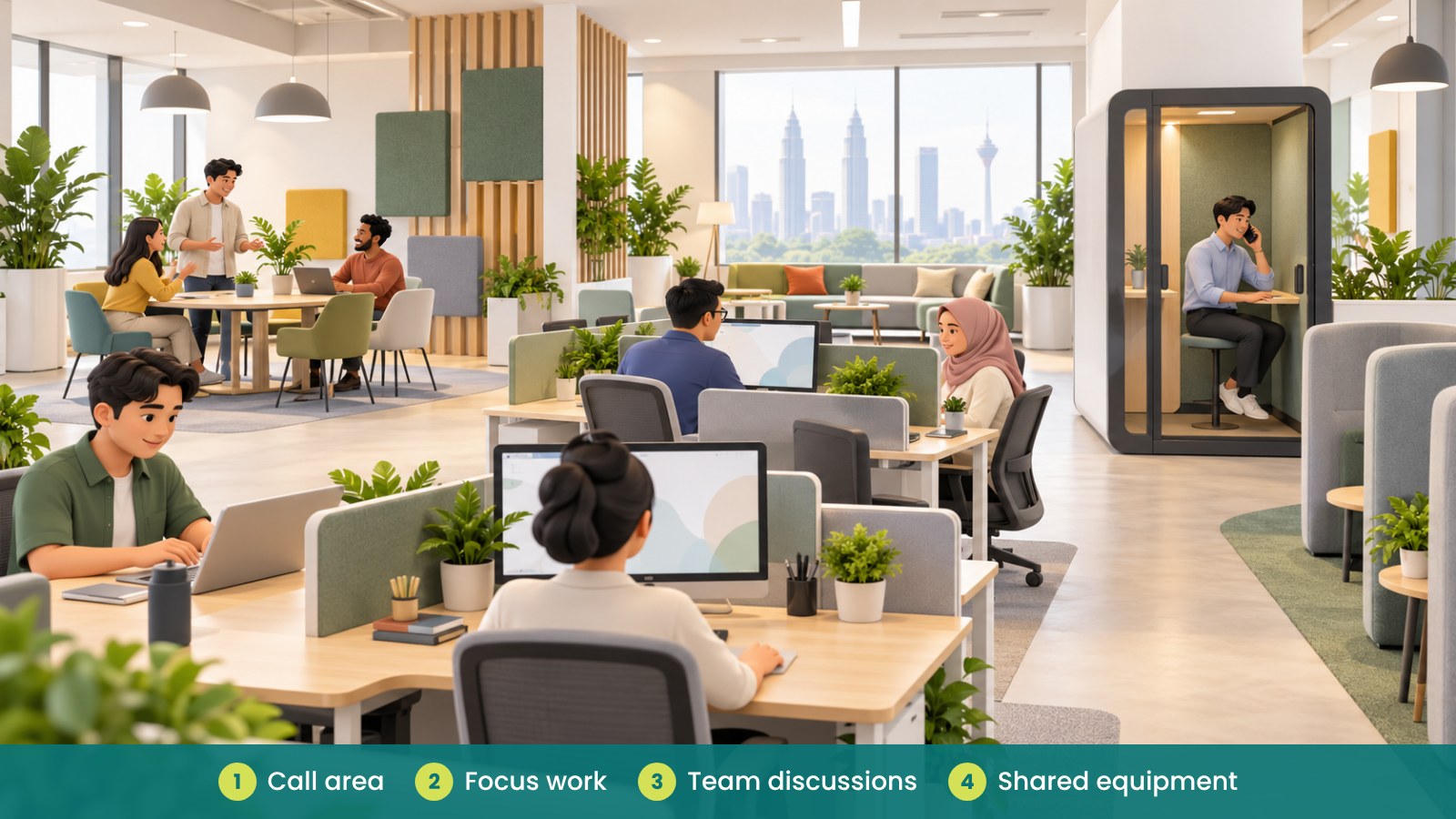
Where does distracting office noise usually come from?
Noise can come from phone calls, team discussions, printers, pantry activity, shared equipment or movement through busy areas. The source may change by time of day, so observe the office during normal working periods before deciding what to move.
Ask staff which sounds interrupt their work and where they notice them most. Different tasks have different needs: a team discussion may be useful in one area and distracting beside someone reviewing detailed documents.
How can the layout help reduce interruptions?
Start by grouping similar activities where practical. Place longer calls or collaboration near a meeting area, while giving focused tasks a quieter location if the floor plan allows. Move printers and other shared equipment away from desks where people need sustained concentration.
Furniture can help define zones without adding walls. A storage unit, screen or change in workstation orientation may create a clearer boundary, but avoid placing items where they block access, visibility or building equipment.
Check the movement paths too. People walking through a call area can create repeated interruptions. A small adjustment to the route or workstation direction may help, depending on the office layout.
| Noise source |
Where it may affect work |
Practical adjustment to consider |
| Calls and video meetings |
Nearby individual workstations |
Set a call area or consider a suitable pod or booth |
| Team discussions |
Open desk rows and quiet work areas |
Use a meeting point away from focused tasks |
| Printers and shared equipment |
Desks near the equipment point |
Move the equipment to a shared service area |
| Pantry or arrival activity |
Workstations near high-traffic routes |
Review routes and place focus work farther away where possible |
| Furniture movement |
Nearby desks and meeting areas |
Plan storage and movable furniture locations thoughtfully |
Can furniture or acoustic pods help?
Furniture can help organise the room and separate activities. Screens, storage and soft seating may support zoning, but the effect depends on the office, the materials and how the space is used. Avoid expecting one product to solve every noise issue.
An acoustic pod or phone booth can provide a separate place for selected calls or focused tasks. Before choosing one, check its size, placement, access, airflow, power and building requirements. Ask for test information for the exact model if you are comparing noise claims.
Think about how many people may need a quiet space at the same time and how long they use it. A pod can become a bottleneck if the team has no shared approach to booking or choosing when to use it.
What team habits can make a difference?
Agree simple expectations for calls and conversations. For example, staff can take longer discussions to a meeting area and use a quieter location for calls that need privacy. Keep the expectations practical and discuss them with the team rather than introducing rules that are difficult to follow.
Make shared spaces easy to identify. If staff know where to go for a call, meeting or quick conversation, they may be less likely to use the nearest desk area. A simple sign or booking approach may help if the team needs it.
For Malaysian workplaces, OSHA and DOSH provide workplace safety context. For a short overview, see OSHA for Offices in Malaysia. This article focuses on practical layout and furniture choices; consider site-specific concerns with your workplace team.
| Office situation |
Question to ask |
Possible next step |
| Frequent calls |
Where do calls interrupt nearby work? |
Trial a dedicated call area or pod |
| Many quick discussions |
Where can people talk without gathering at desks? |
Set a team discussion point |
| Busy shared equipment |
Does it sit beside focused work? |
Review its location and supply storage |
| Peak traffic times |
Which routes pass through desk areas? |
Adjust circulation or workstation orientation |
| Persistent complaints |
Do the same issues recur after changes? |
Ask staff for examples and review the setup |
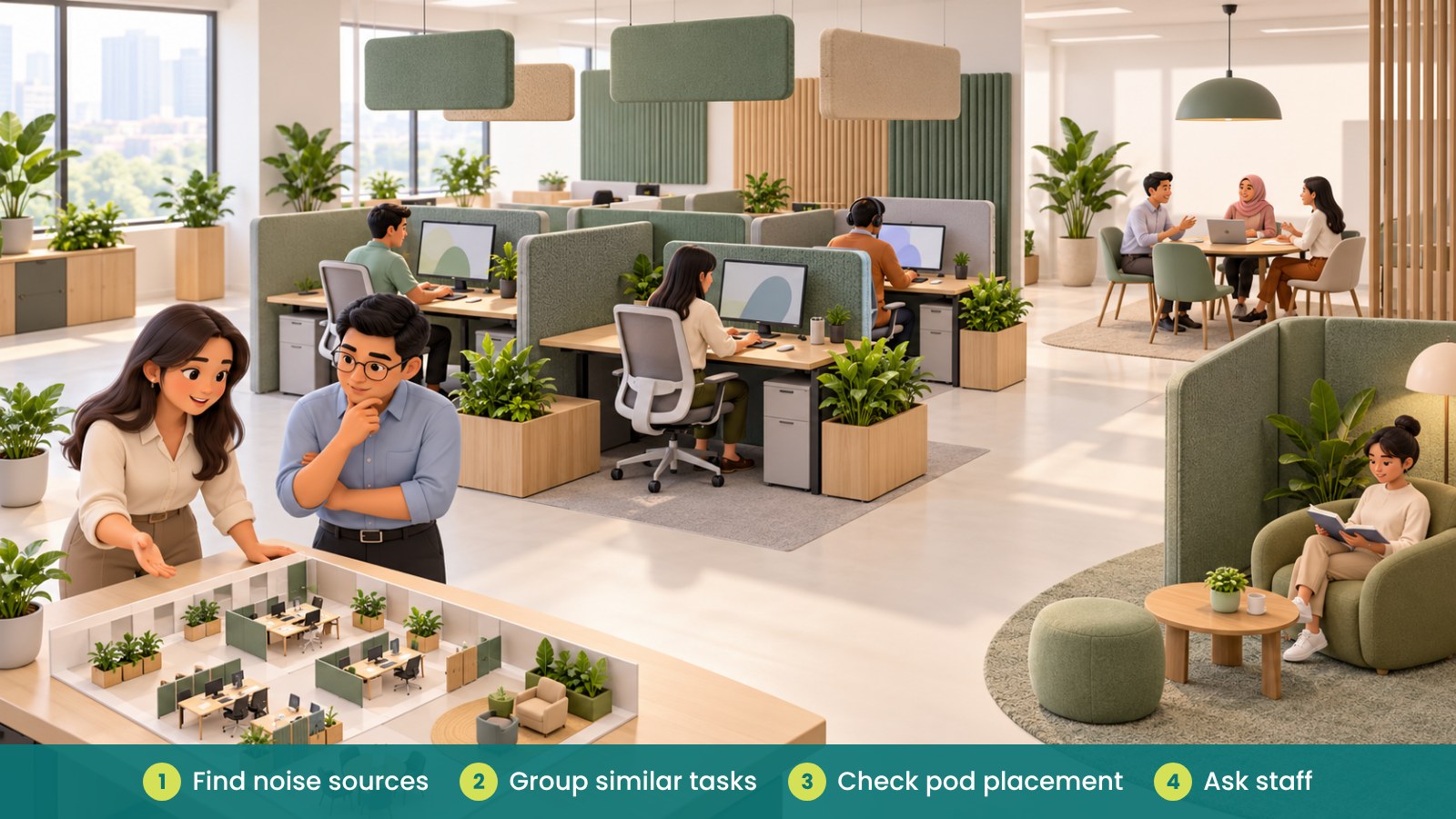
How should you test a noise-reduction change?
Make one or two practical changes at a time and ask the people affected whether they notice a difference. You can compare feedback from busy periods, call-heavy days or team meetings without turning the review into a complex measurement exercise.
Check whether the change creates a new problem. Moving a printer may improve one area but inconvenience another team. Adding a pod may help with calls but take up useful circulation or storage space. Review the whole room, not just the original complaint.
Fictional example: a Kuala Lumpur office reviews call noise
A fictional Kuala Lumpur office notices that staff take calls beside a row of desks used for detailed work. The admin manager asks employees when the noise is most disruptive and checks the layout during a busy afternoon.
The team moves its short meeting point away from the desk row, relocates a shared printer and tests a quieter place for longer calls. After two weeks, the manager asks staff what improved and what still interrupts work before deciding whether further changes are needed.
What common mistakes should you avoid?
- Buying acoustic products before finding the source: observe where and when the disruption happens.
- Moving noise without checking its impact: consider how a change affects other teams.
- Using screens as a complete solution: review layout, activities and team habits together.
- Adding a pod without checking placement: review space, access, airflow, power and building requirements.
- Creating rules staff cannot follow: agree practical expectations with the people using the office.
- Skipping follow-up: check whether the changes help after the team has used the space.
How can iGreen help with open-office planning?
iGreen can help review the office layout and plan furniture that supports different work activities. This may include workstation changes, storage, ergonomic chairs or acoustic pods, depending on the site and team needs. A site assessment can help identify practical options before you decide what to change.
Request a site assessment from iGreen (KL and Penang).
Frequently asked questions
What is the first step to reduce office noise?
Identify the main sources and ask staff when and where the noise disrupts work. This helps you focus on changes that address the actual issue.
Do desk screens stop office noise?
Screens can help define work areas, but their effect depends on the space and how they are used. Combine layout choices with suitable places for calls and discussions.
Should every office have a phone booth?
That depends on the team’s call patterns, available space and building requirements. Review demand and placement before deciding how many, if any, are appropriate.
How do we know if a layout change helped?
Ask the people affected after they have used the space during normal work. Check whether the original distraction has reduced and whether the change created any new inconvenience.